How a non-developer owner reads code
Opening code the AI wrote for me showed nothing but characters. Reading it one file at a time by asking made two things visible, what to ask to be changed and what must never be inside the code.
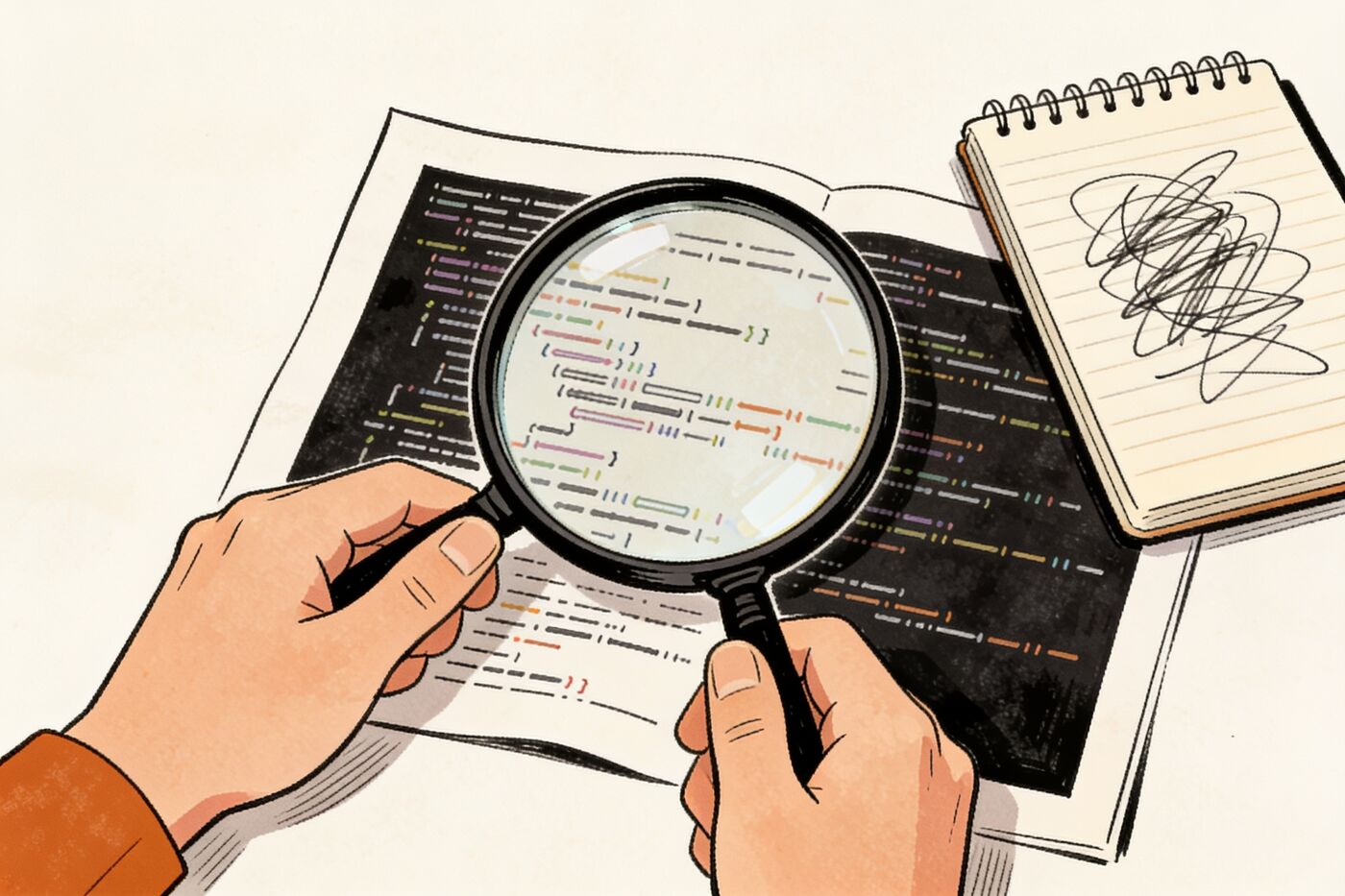
I am not a developer, but my company has code. The quote automation and its move to n8n were both written by AI. While they ran, fine. The trouble came when something needed changing. I opened the file and saw characters.
This post is how a non-developer reads code. Not so much reading as asking. And one thing I found while reading that way: there was something inside the code that should not have been there.
Code is not read, it is asked
Developers read code top to bottom. I cannot. Instead I hand a whole file to the AI and ask. Three questions cover most of it.
What does this file do? I take the answer as one paragraph. If the paragraph does not land, I restate it in my own words and check.
Who calls this? Does the file run on its own, or does something else trigger it? Without this I have no sense of how far a change reaches.
If this value changes, what else changes? I point at the part I want to change and ask. If the answer is "only here", I relax. If it is "there too", I ask about there.
The order I actually asked in
The first time I opened the quote automation script, the questions in order were:
- What does this file do?
- When a form is submitted, which line receives the values?
- Where is the quote template and which line fills it in?
- Which line sends the email? Where is the recipient address decided?
- If I want to change a unit price, which line? Is that the only line?
- Is there any value in this file that should not be visible outside?
- If I break this line, what stops working?
- What would someone who does not know this file ask next?
The sixth question caught something.
The key was sitting in the code
One script that sends out materials had, in plain text, the key that unlocks where those materials are stored. The code lived in a repository, so the key lived there too. I did not even know what the key was. Without the question "is there anything in here that should not be visible outside", I would still not know.
A developer would have spotted it while reading. I could not read, so I had to ask, and asking surfaced it. That question now gets asked every time I open a new file.
I can now say what to change
Even without writing code, being able to say where and how to change it changes the work. Before: "please add an item to the quote". Now: "in the line that fills the template, accept one more item, and add one field to the form. The email part can stay as is." Same request; the second one finishes in a single round trip.
The same holds when instructing an AI. Asking for a change to a file you understand and to one you do not produce different results.
How much is enough
The goal is not to become an expert. The goal is to know where to look next time. After the eight questions for each file, I write the answers next to the file. The next time I open it, I read that note first. That is a non-developer's code documentation.
Code was not the hard part. Not knowing what to ask was.